How to Make Cornhole Bags
Cornhole doesn't have to stop just because we did. Here's the method we used for years, so you can make your own bags at home.
Supplies Needed
If you have a little time and the right equipment, making your own cornhole bags can be a fun project. Gather these supplies first:
- Duck cloth, 2 colors
- Thread to match your duck cloth
- Corn, 8lbs of dry whole kernel corn
- Cutting mat and cutting guide/straight edge*
- Rotary cutter*
- Pencil or fabric pen
- 7" x 7" square pattern*
- Scissors
- Sewing machine
- Heavy-duty needle*
- 2-cup measuring cup*
- Digital scale*
- Funnel*
- Pins
*Optional
Most of these supplies can be found at your local fabric shop. Duck cloth is a heavy, plain, woven cotton fabric (often called "canvas"). It's very durable and resistant to wear and tear—a perfect choice for tailgate or backyard cornhole matches.
According to the American Cornhole Association (ACA), each finished cornhole bag should be made of 10-12oz duck cloth, at least 6" x 6" square, and weigh between 14-16 ounces. A full set of cornhole bags consists of four bags of one color and four bags of another color.
Most fabric vendors sell duck cloth on 60" bolts by the yard. Since you only need about seven inches, you'll have plenty left over for future sets. Make sure to buy thread to match your fabric! Whole kernel corn is available at most feed stores, usually sold in 50-pound bags—you'll have a lot left over there too.
Resist the temptation to use beans, rice, popcorn, etc; they don't hold up nearly as well. Besides, the game is called cornhole! You'll probably spend about $25-30 on materials depending on the season.
Making Your Own Cornhole Bags
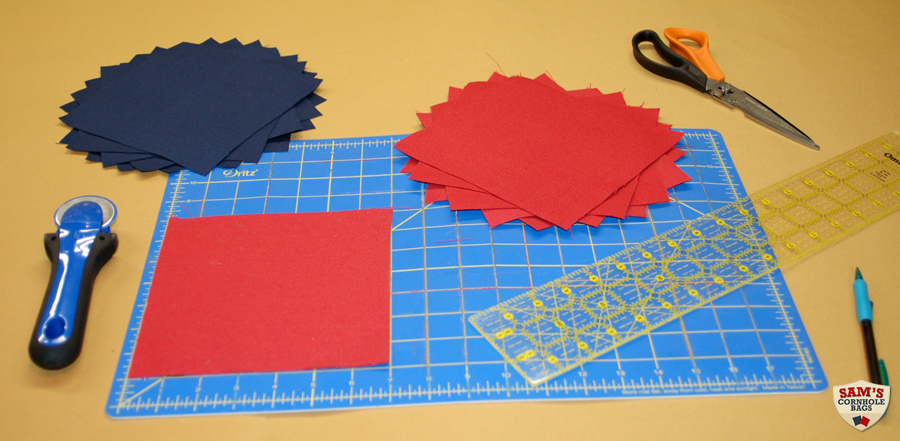
Begin by cutting a 7" x 7" pattern from posterboard or something similar. Trace the pattern eight times on each fabric color and cut out the squares. If you have a cutting mat, cutting guide, and rotary cutter, you can cut the fabric quickly using the measuring lines on the mat. You should end up with 16 squares—eight of one color and eight of the other.
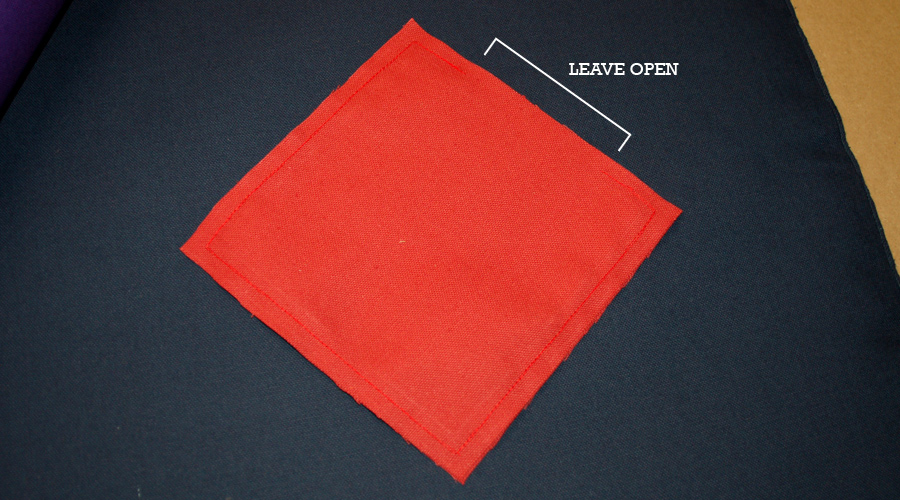
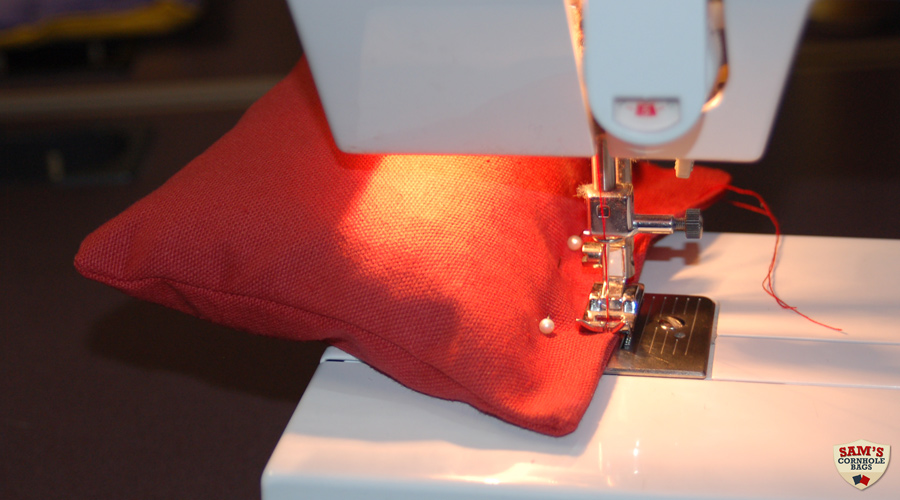
Next, sew your cornhole bags. Thread your sewing machine, take two fabric squares, and match the edges together. Sew with the seam 1/2" from the edge, but leave a gap on one side to flip and fill the bag later. Sew the bags twice, or use the double stitch function if your machine has one—cornhole bags take a lot of hard hits, so they need to be double stitched or they'll burst.
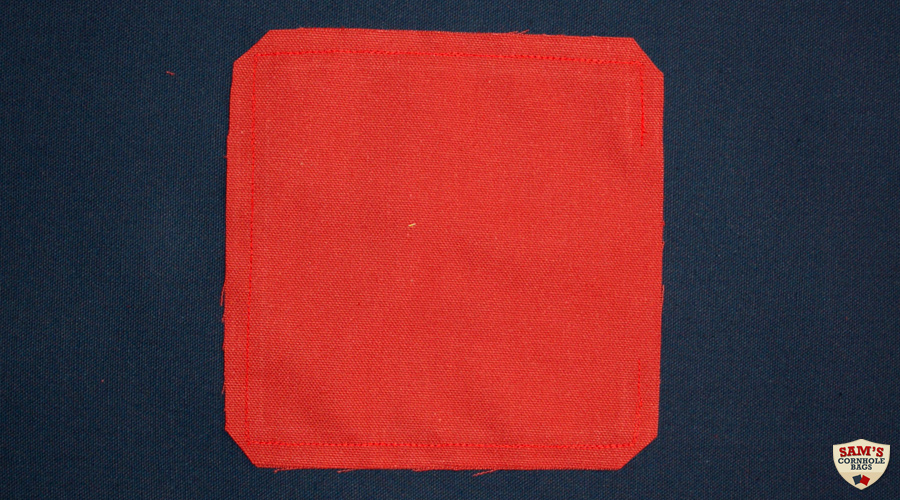
Pro tip: cut the corners! Before flipping your bags inside out, trim the corners off. This gives you sharper corners on the finished bag. Be careful not to cut too close to the thread; leave some fabric between the stitching and the cut edge.
Flip the bags right-side out and poke out the corners. To get them as sharp as possible, use something like a pencil or pen (the blunt end) or the handle of a wooden spoon.
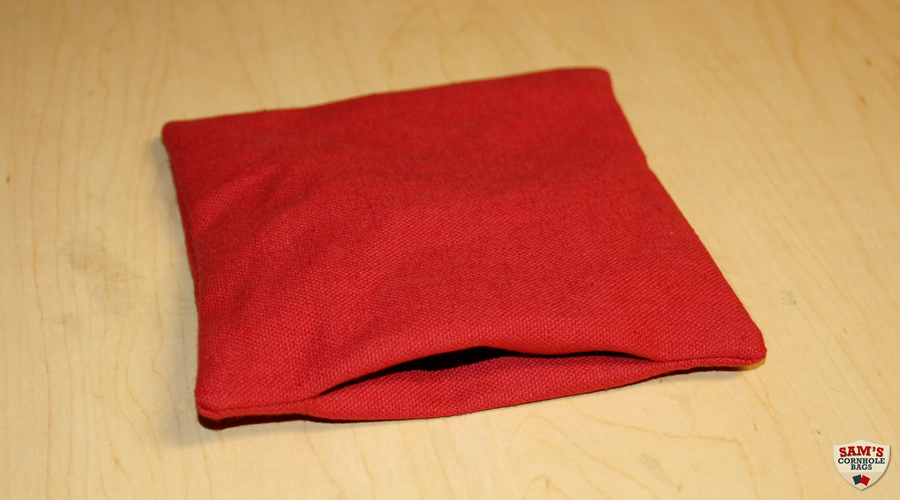
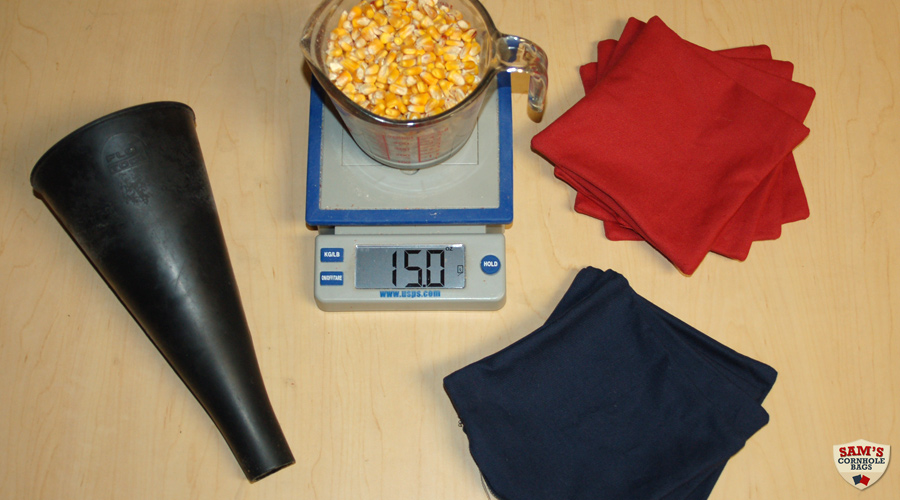
To fill the bags, measure out your corn. If you have a digital scale, aim for 15oz of corn per bag; without one, that's roughly two cups. A wide funnel helps pour the corn in cleanly—you can improvise one from a piece of paper or thin cardboard if needed. Pin the opening closed as you go, as close to the corn as possible, to hold it back.
Finally, tuck the raw edges inside the bag on the open side and sew it shut as close to the edge as possible. Sew the whole length for a clean look, and double stitch this side too.
Now get outside and start tossing! Thanks again for being part of our cornhole community over the years.